
- Define Model UN in your own words and explain how it differs from a debate club.
- Walk through the structure of a typical conference, hour by hour.
- Identify the four jobs every delegate performs — and what chairs actually score.
- Decide whether MUN is the right activity for you, and what your first step should be.
What Model UN actually is
Model UN — sometimes called MUN, Model United Nations, or simply "MUN" — is a structured simulation in which students role-play as the diplomatic representatives of countries other than their own. They sit in committee, follow formal rules of procedure, debate a real-world topic and try to negotiate the text of a written resolution that the body can adopt.
The simulation imitates the actual practice of the United Nations: the General Assembly, the Security Council, ECOSOC, regional bodies, and (at the most ambitious conferences) crisis committees and historical reenactments. The country you represent is assigned by the conference, and your job is to argue its position — not your own — in good faith.
That last point is what makes MUN different from a debate club. You are not trying to win an argument. You are trying to negotiate an outcome. The skill is not adversarial brilliance; it is diplomatic patience, drafting precision, and the ability to convince twenty other people that your version of paragraph four is the one the room can live with.
A short history
Model international assemblies predate the United Nations itself. Students at Oxford and Harvard ran Model League of Nations conferences as far back as the 1920s. When the UN replaced the League in 1945, the simulations followed: Harvard's first official Model UN ran in 1955, and the format spread quickly through American and European universities, then high schools, then the rest of the world.
Today there are tens of thousands of MUN conferences globally each year — from local school weekends to the famous flagship conferences hosted by Harvard, Yale, the London School of Economics, and the United Nations itself. Specialist programs like YIMUN focus the experience further: a single committee, deliberately small cohorts, and intensive mentor-led training before debate even begins.
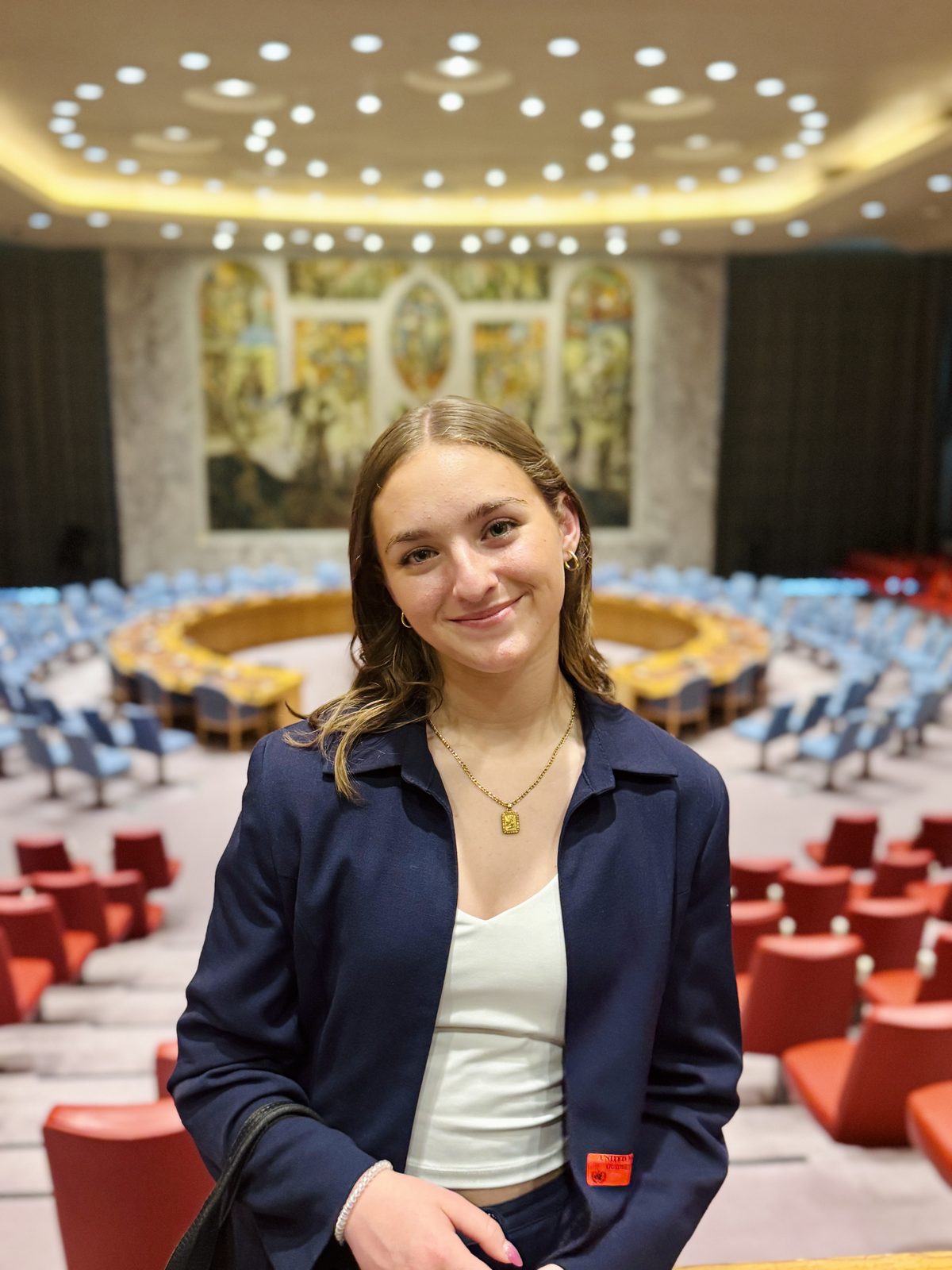
How a conference works, hour by hour
A typical MUN conference runs across three to five days. The structure is consistent enough that once you know the rhythm, every conference feels familiar.
1. Opening ceremony
The conference begins with a plenary opening: keynote speakers, a welcome from the secretariat, and an introduction to the year's topics. It is also the first time you see the people you'll spend the week negotiating with.
2. Roll call and the first General Speakers' List (GSL)
Once committee opens, the chair takes roll call ("present" or "present and voting"), then opens the General Speakers' List — the rolling queue of delegates who want to deliver an opening speech on the topic. Your first GSL speech is your introduction to the room: country position, key concerns, willingness to work with others.
3. Moderated and unmoderated caucus
Debate alternates between two formats. A moderated caucus is a structured discussion on a specific sub-topic — the chair calls speakers in turn for a short speaking time. An unmoderated caucus is the part that looks chaotic to outsiders: delegates leave their seats, group up, and start drafting working papers in clusters around the room. Most of the real diplomacy happens in unmod.
4. Working papers and draft resolutions
By the second day, blocs of delegates start producing working papers — informal early drafts of a resolution. Once a working paper has enough sponsors and signatories, the chair accepts it as a draft resolution, which is then debated, amended, and eventually voted on.
5. Voting bloc and closing
On the final day, the committee enters voting bloc: amendments are voted on, then each draft resolution is voted on as a whole. A passed resolution is the goal — the artefact your committee produces. The conference closes with an awards ceremony.
What a delegate actually does
The delegate role looks different depending on the moment, but it breaks down to four jobs.
- Research the country and the topic — before the conference, in a position paper.
- Speak on the floor — in the GSL and in moderated caucus, advocating your country's position with clarity and brevity.
- Negotiate in caucus — finding allies, trading clauses, building the bloc that can pass a resolution.
- Write — working papers, draft resolutions, amendments. The text is the real currency of MUN.
Strong delegates do all four. Award-winning delegates do all four and elevate the room — they help unblock stuck negotiations, mentor younger delegates, and make committee a better experience for everyone in it.
The single biggest myth
MUN is not about being the loudest person in the room. It is not about "destroying" another delegate. The chairs scoring you can tell within an hour who is performing for the room and who is actually negotiating. The latter wins.
Awards and what chairs are actually scoring
Awards vary by conference, but the typical structure is:
- Best Delegate — the top performer in the committee.
- Outstanding Delegate — the second tier, sometimes given to multiple delegates.
- Honourable Mention — strong contributors who narrowly missed Outstanding.
- Verbal Commendation — recognition without a certificate, increasingly common.
- Best Position Paper — judged separately on the pre-conference written work.
What chairs look for is rarely just "speaking time." A common scoring rubric weighs four things: substance (depth of research and policy), diplomacy (how you treat the room), writing (clauses you authored that survived to the final resolution), and leadership (how often other delegates turned to you).
At reputable conferences — YIMUN included — awards are split by track. High school delegates compete for high school awards, university delegates for university awards, so a beginner is judged against beginners and not against someone with five years of conferences behind them.
Why MUN matters — beyond the resume line
The honest answer is that Model UN trains a cluster of skills that almost no other school activity touches in combination. Public speaking, structured writing, fast reading on unfamiliar topics, the ability to lead a small group through disagreement, the capacity to remain composed when everything in the room is moving at once. Universities know this, which is why MUN consistently appears on admissions reading lists. Employers know it too — the alumni network of serious MUN programs is dense in law, foreign service, journalism, consulting and finance.
But the deeper reason is the one the brochures don't always mention: MUN, done seriously, changes how a young person speaks about the world. After a year of representing countries that aren't your own, you read the news differently. You stop thinking in slogans and start thinking in clauses. That is a permanent shift, and it is worth more than the gavel on the shelf.
How to get started this year
If you have never done MUN before, the path is short.
- Read three position papers — preferably from past Best Delegate winners, freely available online. You'll absorb the voice and structure faster than any guide can teach.
- Watch one committee on YouTube — Harvard MUN, NMUN and YIMUN all post recordings. Twenty minutes of footage is worth a chapter of theory.
- Apply to one conference — ideally a small one with strong training. Beginner-friendly programmes like The Global 60 deliberately limit cohort size and run public speaking, negotiation and drafting workshops before debate begins.
Frequently asked questions
Is Model UN only for students who want to be diplomats?
No. The skills MUN teaches — structured argument, negotiation, public speaking, writing under pressure — transfer to law, business, journalism, public policy, medicine, engineering management, and almost any career that involves convincing other people. Most MUN alumni do not become diplomats.
How much does it cost to do MUN?
Costs vary widely. Local school conferences may charge nothing. Major conferences with international travel can run into the thousands. Many conferences, including YIMUN, offer financial aid — always ask.
How do I get assigned a country?
You either request specific countries on your application or are assigned by the secretariat. Stronger or more experienced delegates are typically assigned to "P5" (permanent UN Security Council) countries, while beginners often start with smaller delegations — which is, despite first impressions, often the better learning experience.
What's the difference between Model UN and debate?
Debate is adversarial — two sides argue against each other to win. MUN is multilateral and consensus-driven — twenty or more delegations try to negotiate a written outcome that as many countries as possible can vote for. The skill of MUN is in producing agreement, not winning an argument.
Where can I learn more before my first conference?
Continue with the rest of the Training Program — particularly Module 04 on position papers, Module 04 on rules of procedure and Module 06 on public speaking. Together they cover roughly 80% of what a first-time delegate needs to know.
Practice what you've learned.
Every module ends with a short, practical exercise. There is no submission, no grade — but the delegates who do the work are the delegates who walk into committee already ahead. Set aside roughly 30 minutes.
- Define MUN in your own voice. In one paragraph, write your own definition of Model UN — without using the word "debate" once. If you can't avoid it, you haven't yet internalised the difference.
- Map the conference rhythm. From memory, list the 10 steps of a typical committee session in order — from roll call to adjournment. Compare with the list in this module.
- The four-jobs test. Write down the four jobs of a delegate. For each, name one specific way you would practise it before your first conference.
- Watch real committee. Find one recorded MUN session online (Harvard MUN, NMUN or YIMUN). Time-stamp three moments where you saw something covered in this module — a moderated caucus motion, a yield, a working paper introduction.
- The one-line pitch. Write a single sentence you could use to explain MUN to a parent, a teacher and a friend. The same sentence should work for all three audiences.