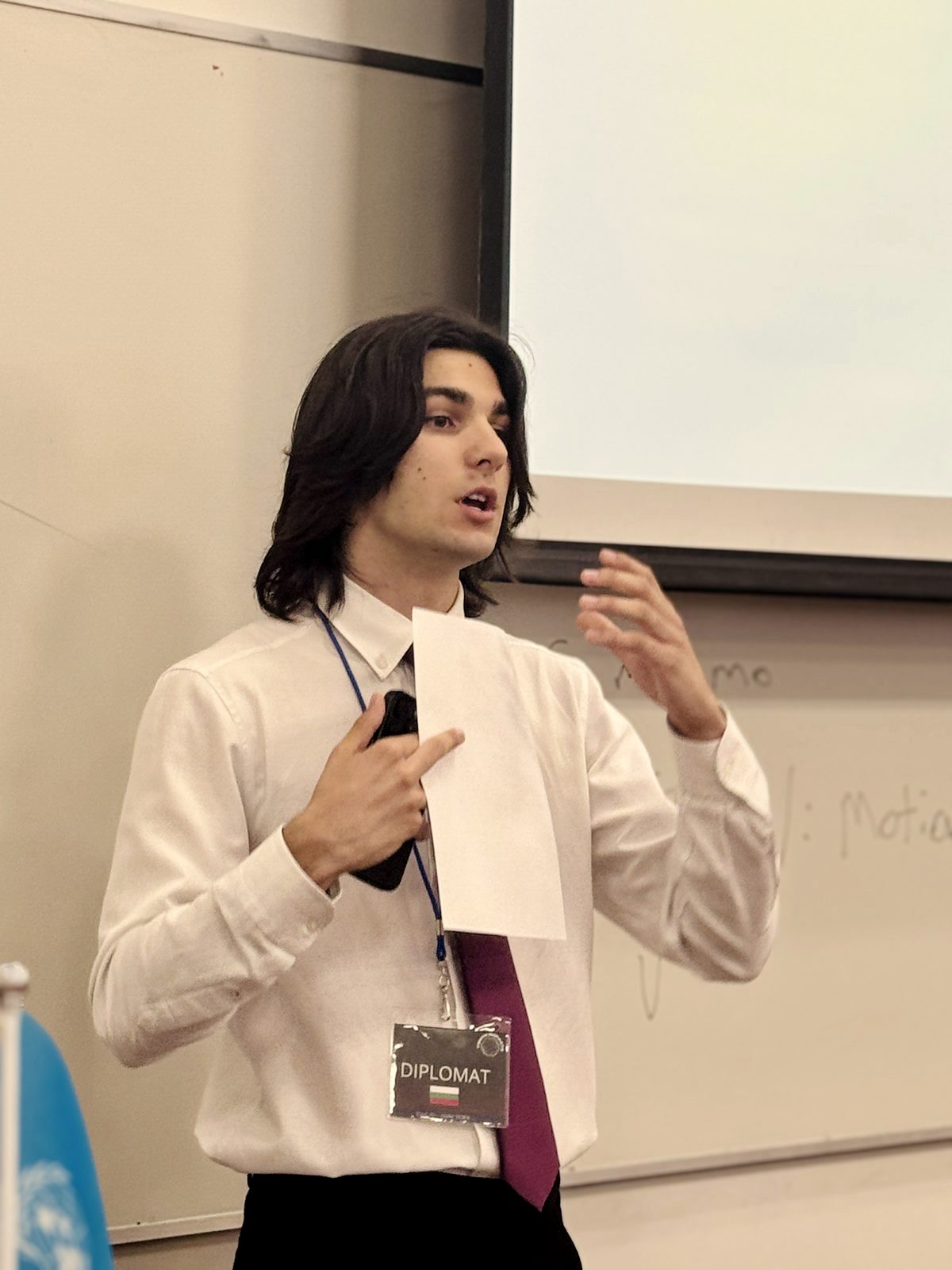
- Define diplomacy as a method, not as a profession.
- Calibrate language across the diplomatic ladder — from notes to condemns in the strongest possible terms.
- Use the four-step disagreement sequence: acknowledge, locate, propose, signal openness.
- Recognise listening and silence as power moves — and practise both deliberately.
What diplomacy actually is
The textbook definition is "the management of international relations by negotiation." That is true and useless. The working definition diplomats use among themselves is closer to: the practice of pursuing your interests in a way that preserves the relationships you'll need next year.
That second definition unlocks everything. Diplomacy is not the absence of conflict. It is conflict managed across time. A negotiator who wins this round but ends the relationship has not done diplomacy; they have done a deal. A negotiator who concedes everything has not done diplomacy either; they have surrendered. The art is in between.
Model UN teaches this because it forces you to negotiate with the same fifty people for three days. By the second afternoon, the room knows who handles disagreement well and who does not. The reputation you build in the first six hours determines the resolutions that pass in the last six.
The five diplomatic skills
Strip away the formal language and diplomacy is built on five concrete capabilities. They show up in committee, in board meetings, in courtroom negotiation, and in any conversation where two people need different things.
1. Reading the room
Knowing what is actually happening — who is allied with whom, who is wavering, what is unsaid. In committee, this means watching unmoderated caucus more than listening to GSL.
2. Calibrating language
Knowing the difference between noting and welcoming, between concern and grave concern. Diplomats can disagree at every temperature; the skill is choosing the right one.
3. Holding the line, holding the door
Maintaining your country's red lines while signalling that the door to compromise remains open. The two are not in tension; the best diplomats do both at once.
4. Building bridges across blocs
Most resolutions die because the sponsors only spoke to people who already agreed with them. The diplomat is the one who walks across the room to the bloc nobody has talked to.
5. Knowing when to be silent
The most underrated skill. Silence after another delegate's strong claim is a response — it can mean assent, it can mean rejection, it can buy time. Strong delegates use it. Loud delegates fill it.
Listening as the unfair advantage
If you remember one thing from this article: in MUN — and in most rooms — the person who listens harder is more powerful than the person who speaks more. The reasons are mechanical.
First, listening tells you what the room actually wants, which is usually different from what the room is saying. Second, repeating someone's position back to them more clearly than they expressed it is the fastest way to earn trust. Third, the delegate who quotes another delegate accurately three hours later — including the qualifications and reservations — is the one chairs flag as ready to lead.
Listening is also a structural choice. Sit at the centre of caucus, not the edge. Take notes, including names. Ask questions before offering positions. The delegates who win awards almost never speak the most. They speak last, because they have heard everyone first.
The grammar of restraint
Diplomatic English is the most calibrated dialect of any language. Every word sits on a scale, and the scale is shared knowledge. "We have certain reservations" is mild but unmistakable. "We are not in a position to support this language at this time" is a polite refusal. "We must register our profound concern" is anger.
This sounds artificial until you realise the alternative. Without a calibrated language, every disagreement looks like the same magnitude of disagreement, and rooms either explode or stop functioning. Diplomatic restraint is the technology that allows hard disagreement to coexist with continued cooperation.
Learning the grammar of restraint is one of the lasting takeaways of MUN. It does not mean you become someone who never says hard things. It means you become someone who can say hard things without ending the conversation.
Disagreeing without losing the room
The hardest moment in any committee is the one where you have to publicly oppose a draft resolution that has the room's momentum. Most delegates either capitulate or attack. Neither works. The diplomatic move is harder and more effective.
- Acknowledge the work — start by recognising the substantive contribution of the sponsors. This is not flattery; it is a procedural reset.
- Locate your specific objection — not "we have concerns about the resolution" but "we have concerns about clause 4(b)." The smaller you can make your objection, the more likely you are to win it.
- Offer a specific alternative — opposition without proposal is read as obstruction. Bring an amendment.
- Signal openness — close with a sentence that leaves room for compromise. "France remains open to language that addresses [the underlying concern] while preserving [our red line]."
This sequence works because it makes opposition look like collaboration. Other delegates can pick up your amendment and run with it. You stay inside the bloc that is forming around the resolution rather than getting cast out of it.
Where these skills go after MUN
The honest answer is: almost everywhere. The list of careers where alumni of serious MUN programs concentrate is longer than just diplomacy: international law, journalism, consulting, finance, public policy, NGOs, entrepreneurship, academia. The reason is that the cluster of skills is rare in combination — listening + structured argument + writing under pressure + reading rooms + handling disagreement — and is hard to acquire any other way.
Universities know this. Admissions officers at competitive schools openly value MUN as a signal of intellectual seriousness and group leadership. But the deeper reason to take diplomacy seriously is selfish: the skill of disagreeing without breaking the relationship is one of the most valuable capabilities a person can carry through adulthood. It compounds.
One sentence to keep
Diplomacy is the practice of pursuing your interests in a way that preserves the relationships you'll need next year. Once you internalise that, every committee feels different.
Practice what you've learned.
Diplomacy is a habit, not a body of knowledge. These exercises are designed to be repeated — once you have done them, do them again next month.
- Ladder rewrite. Take one strong opinion you hold and rewrite it at five increasing temperatures of diplomatic restraint. Read all five aloud. Notice which one you would actually use in committee.
- Disagreement drill. Find an article you disagree with. Write a 200-word response using the four-step sequence — acknowledge, locate, propose, signal openness. Avoid the words "wrong" and "however."
- Listening rep. In your next group meeting (school, family, club), commit to speaking last. Reformulate one person's idea more clearly than they did, attributing them. Notice the response.
- Silence drill. After your next strong claim in conversation, deliberately stop talking. Count to four in your head. Notice what fills the silence.
- Sentence to keep. Write the diplomacy definition from this module on a card. Carry it for one month. Notice when it changes a decision you would otherwise have made fast.